
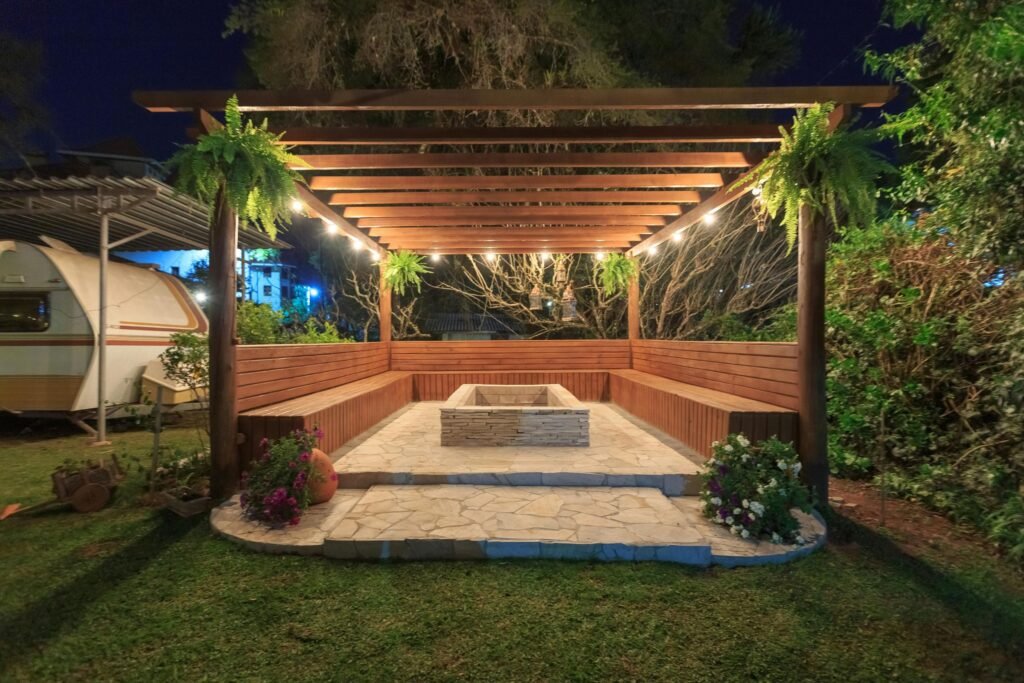
There’s something deeply appealing about timber in a garden. It brings warmth, texture, and a sense of permanence to outdoor spaces that hard materials like concrete or steel simply can’t match. Yet I’ve watched so many homeowners shy away from adding wooden elements, worried they’ll create an oppressive, overly structured feeling that clashes with the lightness and freedom outdoor living is supposed to offer. The good news? Timber can absolutely work in your garden design without making the space feel heavy or claustrophobic. It’s all about how you approach it.
I learned this the hard way, after installing a solid timber deck that made my entire garden feel like an afterthought to the structure itself. That’s when I started experimenting with the principles that follow, discovering that the right choices in wood type, spacing, proportion, and pairing can transform timber from a potential visual anchor into an elegant, weightless design element.
Choose the Right Wood Type and Finish
The color and finish of your timber matters far more than most people realise. Dark hardwoods like walnut or treated pine immediately read as heavier and more imposing, while lighter woods such as cedar, larch, or ash create an airier, more refined impression.
If you’re drawn to the look of darker timber, consider starting with a lighter stain or allowing untreated wood to weather naturally. A weathered, silvery-grey timber feels completely different from fresh chocolate-brown wood, even if it’s the same species. The lightness comes partly from how sunlight reflects differently off aged surfaces, creating subtle variations rather than solid blocks of color.
The finish itself also plays a role. Matte or weathered finishes feel less substantial than glossy sealed wood, which tends to emphasize density and visual weight. If you’re sealing timber for durability, choose clear or light-toned sealants that preserve the wood’s natural character rather than darkening it dramatically.
One detail that made an enormous difference in my own garden: the gap between the timber and the ground. A raised bed or planter that sits directly on soil feels heavy and anchored. The same structure with slats on the bottom, allowing soil to peek through or air to flow beneath, suddenly feels open and intentional.
Master Scale and Proportion
Oversized timber elements are the fastest route to a garden that feels overwhelmed by structure. A chunky timber pergola looming above your seating area doesn’t create shelter; it creates compression. Conversely, delicate, thin timber can feel insubstantial and cheap.
The key is matching the scale of your timber to its function and to the garden’s overall dimensions. Raised beds typically look best with timber roughly 10 to 12 inches high and no thicker than 2 inches. Pergolas and larger structures benefit from slightly heftier posts, but wider spacing between them allows light and air to flow through, preventing that tunnel-like feeling.
Think about the overall volume of timber you’re introducing relative to the garden’s hard landscaping and planting. A garden might handle one substantial timber feature beautifully, while two or three heavy structures begin competing for attention and make the space feel crowded. This is where balancing timber with stone, gravel, paving, and generous planting becomes essential.
Create Visual Airiness with Spacing and Slats
Some of the loveliest timber structures I’ve seen lately are those designed with deliberate gaps. Horizontal slats for raised beds, screens, and pergola roof panels create rhythm and lightness in ways that solid timber simply cannot. The human eye reads openness; it reads air flowing through and around the wood.
A slatted pergola roof feels entirely different from a solid one, even though the weight and material volume might be similar. Those gaps allow dappled light to reach the plants below and create visual interest rather than a flat, heavy ceiling. Similarly, a timber screen made of horizontal slats becomes a design accent rather than a barrier, framing views and filtering sight lines without blocking the garden entirely.
When you’re designing with slats, spacing matters. Gaps that are too narrow feel tight and anxious; gaps that are too wide undermine the sense of structure. Generally, space slats so that the gap equals roughly one-third to one-half the width of the slat itself. This creates a pleasing visual rhythm without making the structure feel skeletal.
Pair Timber with Other Materials
The strongest garden designs rarely rely on a single material. Timber gains elegance when it’s paired deliberately with contrasting materials that break up large wooden surfaces and add visual variety.
Consider combining timber with stone or gravel for raised beds. A timber frame with a gravel base and stone edging feels lighter and more composed than timber alone. Metal accents, whether sleek steel corner brackets or warm copper fixtures, bring contemporary refinement and prevent timber from dominating. Concrete or composite bases beneath timber structures can ground them without the wood appearing to sit heavily on the earth.
The most effective approach I’ve found is the “layering” method. Your timber structure becomes the framework, but it’s the surrounding materials and planting that actually define the space. A timber pergola shaded by climbing roses and clematis, with gravel beneath and lavender planted at its edges, feels open and inviting rather than constructed and imposing.
Strategic Placement and Design Patterns
Where you place timber elements matters as much as what you choose. Concentrated timber at key focal points creates intentionality without overwhelming the garden. A timber seating area in one corner, a pergola over a pathway, or a screen defining the garden’s edge all work precisely because they have purpose and aren’t scattered haphazardly throughout the space.
Repeating a timber element at intervals, rather than creating one continuous run, also feels lighter. Three small timber planters spaced across a border feel more dynamic and less monotonous than one long raised bed.
Height variation prevents timber-heavy designs from feeling flat and boring. Pergolas at varying heights, planter boxes of different depths, and screens that step rather than run straight create visual interest and movement. This dynamism makes people notice the overall composition rather than fixating on the weight of individual structures.
If you’re researching high-end garden architecture, you might look at projects like the timber pavilion structures popular in regions such as a Heavy timber Pavilion USA or Heavy timber Pavilion Canada, which demonstrate how substantial timber can still feel refined through careful detailing, proportion, and integration with landscape. These often succeed by layering their timber with transparent materials, open spacing, and sympathetic surrounding plantings that soften their presence.
Specific Applications That Feel Light
Garden decking feels substantially lighter when it’s raised slightly above grade, with air flowing beneath. A deck that sits directly on compacted soil or concrete slab feels heavy and permanent; one elevated on joists becomes a floating platform that invites movement and change.
Pergolas and shade structures should be open rather than roofed with solid timber. If you need more shade, climbing plants will provide it far more gracefully than wooden panels. The structure becomes secondary to the greenery, and the whole composition feels intentional rather than imposed.
Timber screens work beautifully for defining space or creating privacy, but only if they’re designed to frame views and filter light rather than block them completely. Slatted screens allow glimpses through to planting beyond, while solid panels read as barriers.
Planter boxes feel lighter at varying heights rather than uniform depth. A series of boxes stepping from 12 inches to 18 inches to 24 inches creates visual movement and prevents the monotony that comes from identical repeating elements.
Fencing alternatives deserve special mention. Instead of a solid timber fence, consider a slatted design that allows light through, or a living screen of bamboo or shrubs supported by minimal timber framework. These approaches create enclosure without that bunker-like feeling a traditional timber fence can produce.
The Role of Planting
Here’s the secret that transformed how I use timber in my garden: plants are the real heroes. Timber provides structure, but planting is what makes that structure feel integrated and natural.
Climbing plants against a timber pergola don’t obscure it; they soften it and make it feel less like a naked structure. Clematis, climbing roses, jasmine, or even simple ivy create layers of visual interest while reducing the visual impact of the wood itself. Dense border plantings at the base of timber structures, tall enough to partially obscure them at viewing level, anchor elements while making them feel less prominent.
The interplay between timber and foliage creates dynamic seasonal change too. In winter, when deciduous vines die back, your timber structure remains visible and architectural. In summer, it disappears into greenery. This variation prevents the garden from feeling static or dominated by any single material.
Layering is the operative word here: timber structure, then green screening or climbing plants, then border plantings. This progression creates depth and prevents timber from reading as a foreground element.
Conclusion
Timber in garden design doesn’t have to feel heavy or imposing. By choosing light wood types, embracing spacing and slats, maintaining thoughtful proportion, pairing timber with complementary materials, and always, always allowing planting to play its softening role, you create gardens that feel both structured and serene.
The beauty of these principles is that they work whether you’re adding a single timber raised bed or redesigning your entire garden architecture. Start with one element, observe how it feels and functions, and build from there. You’ll find that timber, used with intention and care, becomes one of the most versatile and rewarding materials in your garden design toolkit.